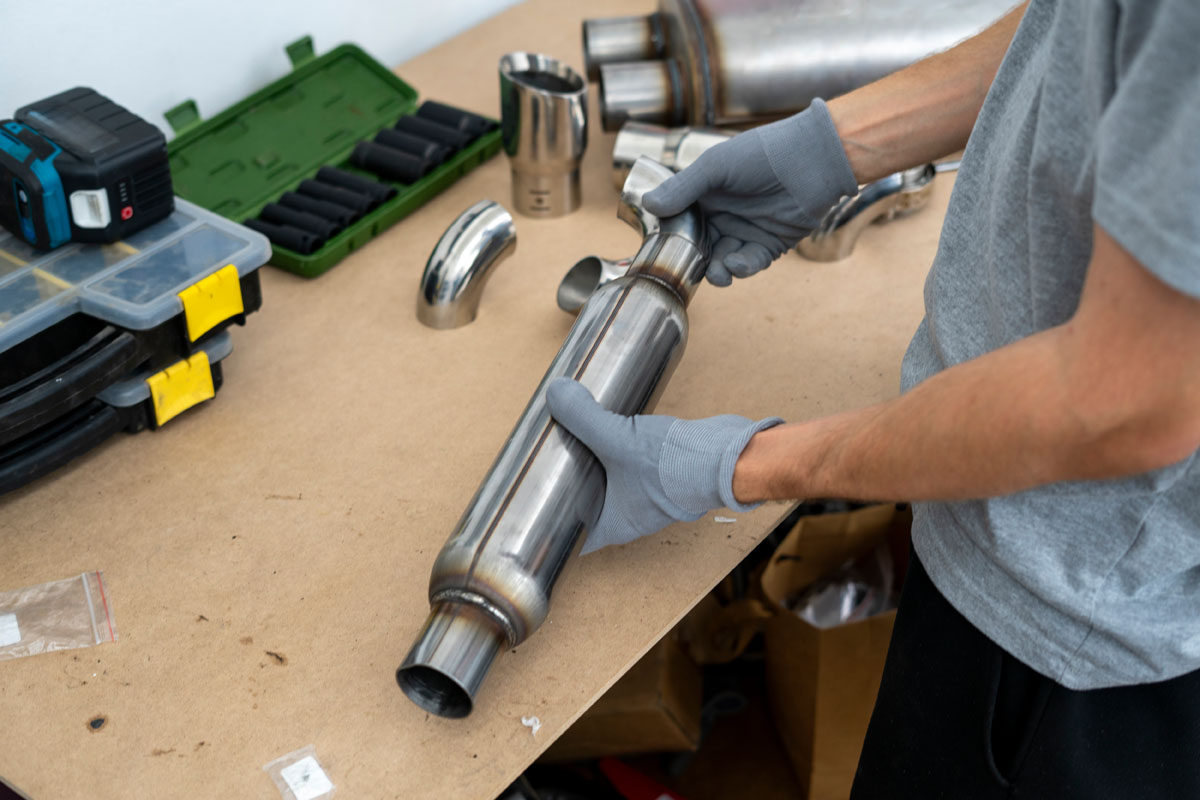
A catalytic converter is a component of a vehicle’s exhaust system designed for decreasing noxious emissions. Its main function is to convert harmful pollutants created from the combustion process and expelled in the exhaust gases into a less harmful substance prior to them getting released into the air.
The catalytic converter contains a honeycomb-type structure coated with precious metals like palladium, platinum, and rhodium. As the exhaust gases pass through the converter, the metals take the roll on as catalysts, promoting a chemical reaction that superheats and breaks down detrimental pollutants.
There Are Two Main Types of Catalytic Converters
Two main types of catalytic converters
2-Way Catalytic Converter
A 2-way catalytic converter mainly converts carbon monoxide into carbon dioxide and oxidizes unburned hydrocarbons into water-vapor and carbon dioxide These types of converters are typically found in older vehicles, a lot of which are still presently on the road.
3-Way Catalytic Converter
A 3-way catalytic converter is more advanced and can also decrease nitrogen oxide emissions, transforming them into nitrogen gas and oxygen. These types of converters are used in a lot of modern vehicles and are more effective at decreasing overall emissions.
By considerably decreasing noxious emissions, catalytic converters refine air quality and safeguard the environment.
Legality of Catalytic Converters
Legally, it’s pretty evident concerning catalytic converters. If your vehicle had one installed when it was manufactured, federal law strictly prohibits it from being removed. Enforcement, nevertheless, is another matter. There are a large number of states with little to no consequences for removing a catalytic converter, and a lot of areas don’t utilize an inspection process to be sure the component is accounted for.
In the states of Colorado, New York California, and Maine, and possibly in other states too, tougher emissions standards are required, and a CARB-compliant component is required to be used if you’re installing a new one on a vehicle that still has its factory warranty. If the warranty has elapsed, it’s satisfactory to have any operational catalytic converter installed.
The legal terms are paramount in counties or cities that require an emissions check process. If you’re required to have your vehicle inspected and emissions checked yearly or twice a year, then it must, by law, have an operable catalytic converter, or it is going to fail its test. Which is going to require a repair.
Repercussions of Driving Without a Catalytic Converter
Driving without having a catalytic converter can lead to several repercussions, both legal-wise and mechanical. The following are some of the possible outcomes:
Heightened Emissions – Devoid of a catalytic converter, your vehicle is going to release higher levels of toxic pollutants such as nitrogen oxides, carbon monoxide, and hydrocarbons, increasing air pollution.
Legal Penalties – In a lot of areas, it’s against the law to drive a vehicle without a catalytic converter or with an intentionally impaired one. You could face penalties, fines, or possibly have your vehicle impounded (which includes impoundment fees when/ if you’re caught driving without one).
Failed Vehicle Emissions Test – A lot of districts require emissions testing to guarantee that vehicles fulfill particular air quality standards. If your vehicle does not have a catalytic converter, it is going to fail these tests, possibly resulting in fines, the inability to renew your registration, or required repair to your vehicle.
Decreased Engine Performance – The ECM in today’s vehicles is designed to work with the catalytic converter intact. Removing or circumventing the converter can cause the ECM to receive inaccurate data, which results in decreased engine performance, decreased fuel efficiency, and possible damage to other components like O2 sensors.
Noise Increase – Catalytic converters additionally act as somewhat of a muffler, decreasing exhaust noises. Removing the converter is going to result in a louder exhaust noise, which could violate local noise ordinances.
Possible Damage – Driving a vehicle that does not have a catalytic converter is going to lead to heightened exhaust temperatures, which could cause impairment to other components in the vehicles exhaust system.
Land Rover Repairs By Rov-N-Techs In Scottsdale, Arizona
Rov-N-Techs performs all factory recommended services on Land Rovers & Jaguars at affordable prices! Master Technicians, Joe Caraway and Kevin Curtis worked at Land Rover of North Scottsdale for 10 years before opening their own shop in 2006 under the name of “Rover Techs”. Now known as “Rov-N-Techs” Joe and Kevin offer over 35 years of combined Land Rover experience. Contact us today!