
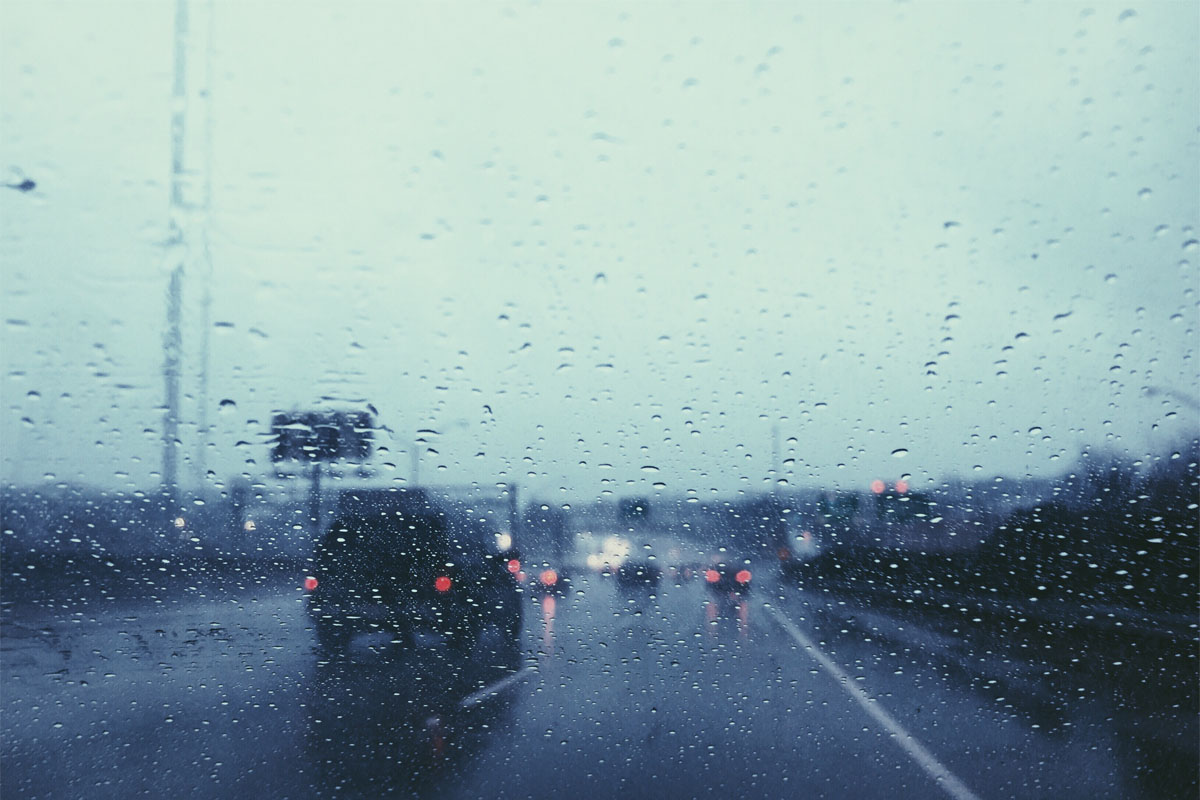
Spring and summer showers may mean flowers, however, wet roads contribute to nearly 1.2 million traffic accidents every year. The below are some Monsoon safety driving tips you are going to want to follow the next time you catch yourself driving in the rain.
Safety begins before you drive, and your objective should be to see and be seen, and to actually get to where you’re going. Replace windshield wipers that leave behind streaks or don’t clear the windshield in a single pass. Be assured your headlights, brake lights, taillights, and turn signals are functioning properly so other drivers can see you during rainstorms. Turn your headlights on whenever driving.
Adequate tire inflation and tread depth are vital to maintaining favorable traction on wet roadways. Inspect tread depth with a penny placed upside down into the tire tread. If you can see above Lincolns head, start thinking about new tires. Check every tire’s pressure, (don’t forget the spare), at least monthly… and make sure to check tire pressure when they have not been driven on.
Avoid Cruise Control
A lot of modern vehicles come with cruise control. This feature works greatly in dry weather, however, when used in wet weather, the possibility of losing control of the vehicle could increase. To avoid traction loss, you may be required to decrease the vehicle’s speed by taking your foot off the gas pedal, which cannot be carried out when cruise control is active.
When driving in wet-weather conditions, it is vital to focus fully on every factor of driving. Avoid using cruise control is going to allow you more alternatives to choose from in response to a possible loss-of-traction circumstance, therefore, optimizing your safety.
Slow Down and Leave Room
Decreasing speed throughout wet weather driving can be critical to reducing a vehicles possibility of hydroplaning, when the tires rise up on a layer of water. With as little as an inch of water on the road, tires have to expel a gallon of water each second to keep the tires on the road. You should decrease your speed to coincide with the quantity of water on the roadway. At speeds as low as thirty-five mph, new tires can still be in jeopardy of losing some contact with the roadway.
To decrease possibility of hydroplaning, you should decrease your speed, avoid braking hard or sharp turning and drive in the tread marks of the vehicle in front of you. Additionally, it’s important for motorists to allow adequate stopping distance between vehicles by increasing the following distance of the vehicle in front of them and starting to slow down to stop at intersections, turns and other drivers ahead of time.
Reacting to a Skid
Even cautious drivers can endure skids. If you feel your vehicle starts to skid, it’s important to keep your composure and follow these essential steps:
- Keep looking and steering in the direction in which the you want the vehicle to go.
- Try and avoid hitting the brakes hard as this is going to worsen the vehicle’s balance, making it harder to control.
Generally, you want to be especially careful in wet weather. Reduce speed, avoid hard braking or sharp turning and allow adequate stopping distance between you and the vehicle in front of you. Additionally, do these things one at a time. Brake, then turn, then increase speed.
Land Rover Repairs By Rov-N-Techs In Scottsdale, Arizona
Rov-N-Techs performs all factory recommended services on Land Rovers & Jaguars at affordable prices! Master Technicians, Joe Caraway and Kevin Curtis worked at Land Rover of North Scottsdale for 10 years before opening their own shop in 2006 under the name of “Rover Techs”. Now known as “Rov-N-Techs” Joe and Kevin offer over 35 years of combined Land Rover experience. Contact us today!